

Mold & Biofilm in HVAC Systems
What it actually is, how it forms in Tampa homes, and what health risks are real versus overblown, explained plainly by a local technician.
Quick answer: Biofilm is a thin layer of bacteria and sometimes fungi that forms on moist surfaces inside your HVAC system, most often starting on the evaporator coil. It’s different from visible mold, which needs more sustained moisture to establish colonies. Both matter, but not every duct system with biofilm has active mold growth, and inspection is the only way to tell the difference.
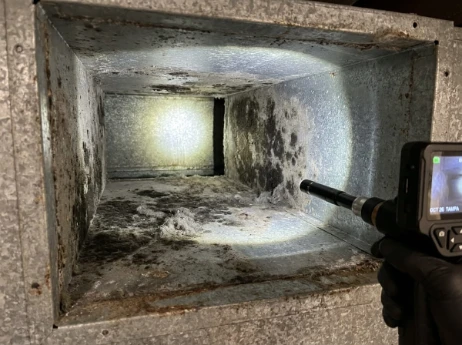
What Biofilm Actually Is
Biofilm is a thin, often slimy layer of microorganisms, bacteria and sometimes fungi, that forms on surfaces exposed to consistent moisture. Inside ductwork, it typically develops on the evaporator coil first, then can spread into adjacent duct sections if conditions stay favorable. It’s different from visible mold growth, which tends to appear as distinct colored patches, biofilm is often less visually obvious but can still affect air quality and system performance.
How Biofilm Forms in Tampa Homes
It comes down to the same cycle we cover in our humidity guide: warm, moist air condensing on cold surfaces, combined with organic dust particles, creates exactly the environment biofilm needs. In Tampa, where AC runs nearly year-round, that cycle repeats constantly.
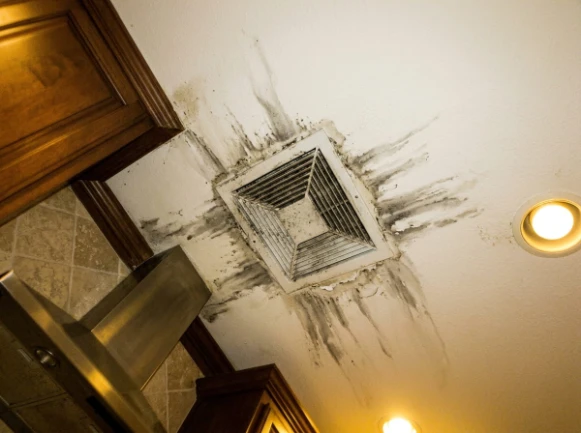
What We Actually Do About It
Our duct sanitizing service addresses biofilm and mold directly, we clean the contaminated areas and apply treatment where needed. For coil-specific biofilm, see our evaporator coil cleaning page, since the coil is usually where this starts.
We inspect first and only recommend sanitizing when we actually find mold, odor, or biofilm, not by default on every job.
Quick Answers
How do I know if it’s biofilm or just normal dust?
Biofilm often has a distinct musty smell and can appear slightly slimy or discolored on inspection, normal dust doesn’t carry that odor. We identify it during inspection rather than guessing from a phone description.
Can I clean biofilm myself?
We don’t recommend it. Improper cleaning can spread contamination further into the duct system rather than removing it, and coil-area biofilm often requires specific tools and technique.
Does sealing my ducts prevent biofilm from coming back?
Sealing reduces condensation-prone leak points, which helps, but it doesn’t eliminate the underlying humidity cycle. Regular maintenance on a 3 to 5 year schedule is still the most reliable prevention. See our FAQ page for general frequency guidance.
Related Guides & Services
Noticing a Musty Smell or Visible Growth?
We’ll inspect your system, identify what’s actually there, and give you a written price for what it takes to fix it.
📞 Call (656) 246-9249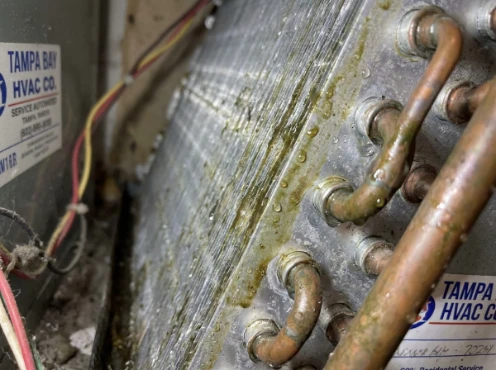
Mold vs. Biofilm, What’s the Difference?
Mold is a type of fungus that reproduces through spores and typically needs more sustained moisture and organic material to establish visible colonies. Biofilm can include bacteria and sometimes early-stage fungal growth, and it often develops faster, in more marginal moisture conditions, than a full mold colony would. Both matter, but they’re not identical, and not every duct system with biofilm has active mold growth.
See our full breakdown of the underlying cause in our humidity guide.
What Health Risks Are Actually Real
Can biofilm or mold in ductwork make people sick?
For most healthy people, exposure to typical household-level biofilm or minor mold in ductwork is more likely to cause mild symptoms, musty odor sensitivity, minor allergy-like irritation, than serious illness. For people with asthma, existing respiratory conditions, or compromised immune systems, the same exposure can be more meaningful. We’re not doctors, and if you have specific health concerns, that’s worth discussing with a physician alongside addressing the duct issue itself.
Does every Tampa home with old ductwork have dangerous mold?
No. Plenty of older homes have ductwork that’s never been cleaned but also hasn’t developed serious contamination, it depends on humidity exposure, duct material, and how long buildup has been accumulating. That’s exactly why we inspect before we diagnose anything, rather than assuming the worst on every job.