

How Tampa’s Humidity Affects Your Ducts
Why our climate is the root cause of most duct problems here, and why homes in drier states simply don’t deal with this.
Quick answer: Tampa’s near-constant humidity causes condensation on your evaporator coil every time your AC runs, which combines with dust already in your ductwork to create biofilm. Because Tampa homes run cooling systems almost year-round, this cycle repeats far more often than in drier climates, which is why local ducts accumulate contamination faster.
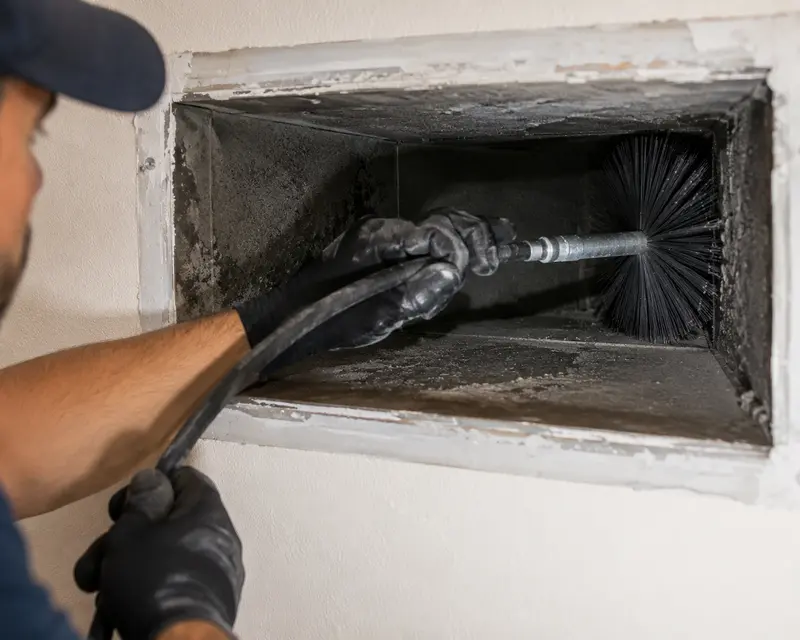
Why Humidity Is the Root Cause of Most Duct Problems
If you’ve lived in Tampa Bay for any length of time, you know the humidity here isn’t a seasonal inconvenience, it’s a year-round condition your home has to fight against constantly. What most homeowners don’t realize is how directly that humidity connects to what’s happening inside their ductwork, and why homes in dry climates simply don’t deal with the same problems we do here.
The Biofilm Cycle
Every time your AC runs, and in Tampa that’s most of the year, warm humid air moves across a cold evaporator coil and condenses. That moisture, combined with dust particles already in your ductwork, creates the exact environment biofilm needs to grow: warmth, moisture, and organic material. It’s not a one-time event, it’s a cycle that repeats every single cooling cycle.
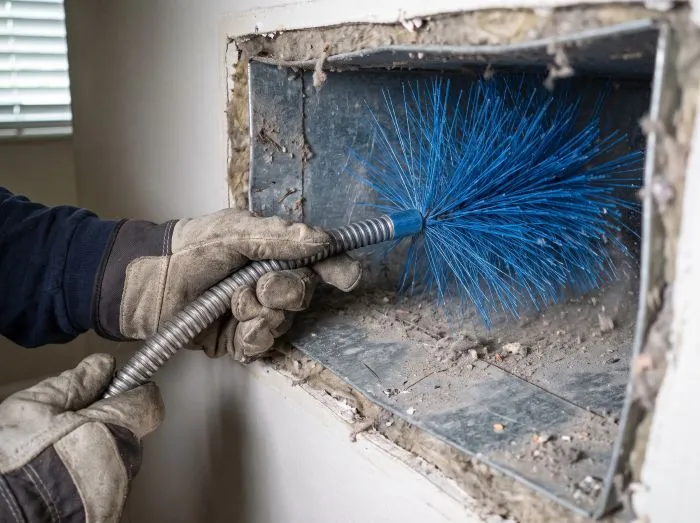
Why This Is Worse Here Than Almost Anywhere Else
Tampa’s average humidity sits well above national norms for most of the year, and unlike drier states where AC use is more seasonal, Tampa Bay homeowners run cooling systems nearly continuously from spring through fall. More runtime means more condensation cycles, which means more opportunity for biofilm to establish itself inside ductwork that’s never been cleaned.
Standing Water and Condensation Line Issues
Humidity doesn’t just affect the coil, it affects your entire system’s moisture load. A clogged condensation line or improperly sloped ductwork can trap standing moisture, which accelerates contamination dramatically compared to a system that drains properly.
How Humidity Shows Up in Your Ductwork
Does humidity alone cause mold, or does it need something else?
Humidity provides the moisture, but mold and biofilm also need organic material, dust, skin cells, debris, to actually grow. That’s why ducts that have never been cleaned, combined with Tampa’s humidity, create the perfect long-term contamination environment. See our full guide on mold and biofilm in HVAC systems.
Why do some Tampa homes have worse humidity-related duct issues than others?
Home age and duct material both play a role. Older homes with retrofitted ductwork, especially in South Tampa and West Tampa, tend to have more joints and transition points where condensation collects. See our duct types guide for how material affects this.
What Actually Helps
Regular cleaning on a 3 to 5 year cycle keeps the biofilm cycle from compounding year over year. In some cases, we also recommend duct sealing to reduce condensation-prone gaps, or UV light installation near the coil to slow microbial growth between cleanings. See our duct sealing page and UV light page for more.
Quick Answers
Does running my AC less reduce duct contamination?
It can help marginally, but Florida’s climate makes it impractical for most homeowners to significantly cut cooling hours. Regular duct maintenance is the more realistic solution.
Is Tampa’s humidity worse than other Florida cities?
Tampa Bay’s humidity is broadly consistent with the rest of central and coastal Florida, though homes near the water deal with an added salt-air factor. See our guide on salt air and coastal homes.
Can a dehumidifier fix this problem instead of duct cleaning?
A whole-home dehumidifier can help reduce overall moisture load, but it doesn’t remove existing contamination already sitting in your ductwork. The two address different parts of the problem.
Related Guides & Services
Ready to Break the Cycle?
We’ll inspect your ductwork, tell you honestly what Tampa’s humidity has done to it, and give you a written price before anything starts.
📞 Call (656) 246-9249